
 Call Us (270) 717-5433
 Text Us (270) 883-2464
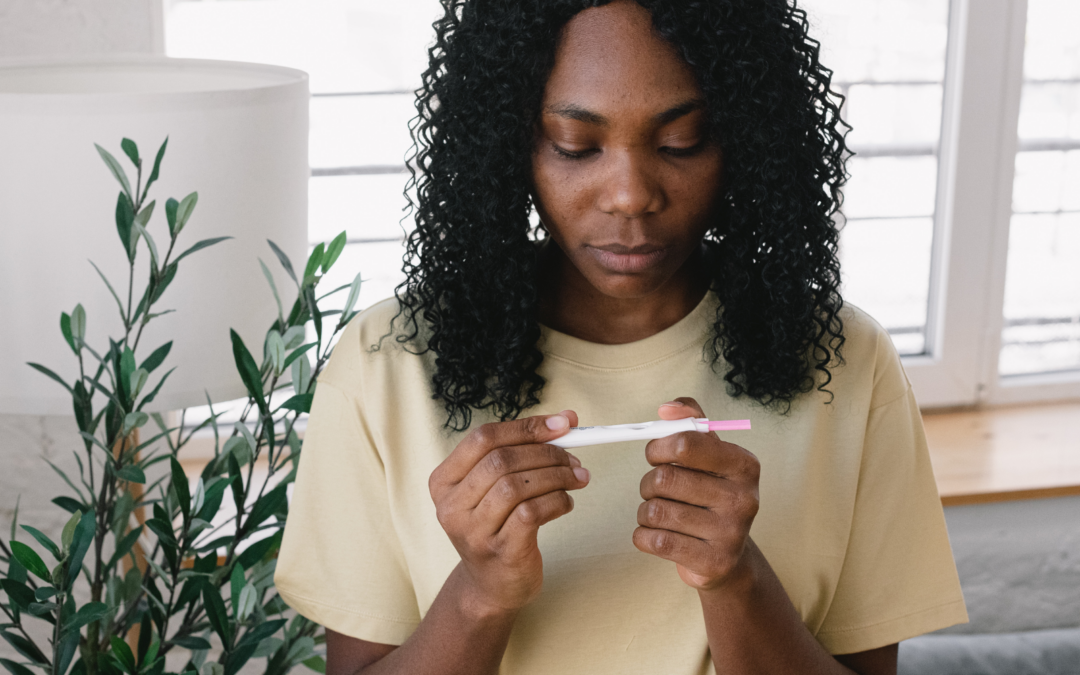
If you have recently had unprotected sex or are concerned you could be pregnant, you are probably wondering… how soon can I take a pregnancy test?
It’s important to know that taking a pregnancy test too early can yield inaccurate results. In this article, we’ll explore:
- How pregnancy tests work
- The best time to take a pregnancy test
- Your next steps if your result is positive
Keep reading to learn more.
How Do Pregnancy Tests Work?
Pregnancy tests work by checking your urine (pee) for a hormone called human chorionic gonadotropin (HCG). Your body only makes this hormone if you’re pregnant.[1]
There must be enough HCG present in your urine for an at-home pregnancy test to detect the hormone and provide a positive result. One of the most common mistakes women make is testing too early because they are anxious for answers. This can lead to a negative result even when they are actually pregnant.
When is the Best Time to Take a Pregnancy Test?
Some pregnancy tests claim to be able to give an accurate result up to 6 days before your missed period.[2] However, medical professionals recommend waiting until after you’ve missed your period.[1]
If you take a pregnancy test too soon, it may result in a false negative. This is because there has not been enough time for your body to produce a detectable amount of HCG. Waiting to test until the date of your missed period (or after) gives you a more accurate result.
What If My Pregnancy Test is Negative, But My Period is Late?
If your period is late but your pregnancy test is negative, it may mean that you are not pregnant and that another factor is affecting your cycle. The most common factors include:
- Hormone changes or imbalances[3]
- Stress[4]
- Weight loss (due to excessive exercise or restrictive diets)[5]
- Birth Control[6]
- Thyroid conditions[7]
Although false negatives can occur, they become much less common after you’ve missed your period. It is more likely that something else is causing your period to be late.
Some women find that the stress of worrying if they are pregnant can cause their periods to be delayed. After receiving a negative test at their missed period date, their stress level diminishes significantly and their period comes a few days later.
What If I Need To Know Now and Can’t Wait Until My Missed Period?
Waiting for enough time to pass before taking a pregnancy test can feel overwhelming when you have questions about your future or feel like you just cannot be pregnant right now.
While there isn’t a way to speed up the biology of pregnancy testing, there are steps you can take while you wait. Remember that one late period or one moment of worry does not automatically mean you’re pregnant. Regardless of the result, you don’t have to navigate it alone.
Here’s what you can do in the meantime:
- Avoid spending hours searching online. The internet can be helpful, but it can also increase anxiety and provide conflicting information.
- Track your symptoms and cycle dates. Make note of when your last period started, any symptoms you’re experiencing, and when you had sex. This information may be helpful later and can be easily forgotten if not written down.
- Focus on what you know right now. It can be easy to jump ahead and imagine every possible outcome. Try to take things one step at a time.
- Talk to someone you trust. If you’re feeling overwhelmed, consider reaching out to a trusted friend, family member, or the compassionate staff at Life Choice.
- Make a plan for your next step. Knowing where and when you’ll go for answers can help you feel more prepared. Start by scheduling an appointment with Life Choice for a free pregnancy test! We suggest scheduling that appointment for the date you expect your period, or a day or so after, so that the result is accurate. This can give you a sense of security that answers are coming.
What Are My Options If the Result is Positive?
If the result of your pregnancy test is positive, the options available to you depend on whether the pregnancy is considered viable and how far along you are (gestational age). Just because you have a positive pregnancy test does not mean that the pregnancy is viable.
In early pregnancy, “viability” refers to whether a pregnancy is expected to continue developing normally.[8] A normally developing pregnancy would be deemed viable, whereas an early pregnancy loss (miscarriage) or ectopic pregnancy would not.[8]
Since as many as 1 in 4 (26%) of all pregnancies end in miscarriage[9], it is important to know if your pregnancy is viable, so that you get accurate information on what options are available to you. An ultrasound can provide important information about viability, gestational age, and the location of the pregnancy.
At Life Choice, we can help determine pregnancy viability and how far along you are through a free and confidential ultrasound. We can also help you explore your pregnancy options:
Key Takeaway: Most women will get the most reliable pregnancy test result on or after the date of their missed period. If your result is positive, an ultrasound can provide important information about viability, gestational age, and your available options.
Free Pregnancy Testing in Russellville, Kentucky
If you’re concerned about a possible pregnancy, our team is here to answer questions, provide free pregnancy testing when the time is right, and help you understand your options in a confidential environment.
Give us a call at 270-717-5433 or schedule your appointment online today.
Please be aware that Life Choice Pregnancy Care Center does not provide or refer for abortion services.
Sources
- Cleveland Clinic. (2022, November 28). Pregnancy Tests. https://my.clevelandclinic.org/health/diagnostics/9703-pregnancy-tests
- Clearblue. (2026, May 7). When can I take a pregnancy test? https://www.clearblue.com/pregnancy-tests/early-pregnancy-testing
- Cleveland Clinic. (2026, May 13). Hormonal imbalance: Causes, symptoms & treatment. https://my.clevelandclinic.org/health/diseases/22673-hormonal-imbalance
- Clearblue. (2025, August 6). What does getting a negative pregnancy test result mean? https://www.clearblue.com/pregnancy-tests/negative-results
- Cleveland Clinic. (2023, August 7). Yes, Weight Loss Can Impact Your Menstrual Cycle. https://health.clevelandclinic.org/can-weight-loss-affect-your-period
- Mayo Clinic. (2025, February 28). Delaying your period with hormonal birth control. https://www.mayoclinic.org/tests-procedures/combination-birth-control-pills/in-depth/womens-health/art-20044044
- OAH | Office on Women’s Health. (2026, May 29). Thyroid disease. https://womenshealth.gov/a-z-topics/thyroid-disease
- American College of Obstetricians and Gynecologists (ACOG). (n.d.). Understanding and Navigating Viability. https://www.acog.org/advocacy/facts-are-important/understanding-and-navigating-viability
- Quenby S, Gallos ID, Dhillon-Smith RK, et al. Miscarriage Matters: The Epidemiological, Physical, Psychological, and Economic Costs of Early Pregnancy Loss. The Lancet. 2021;397(10285):1658-1667. https://pubmed.ncbi.nlm.nih.gov/30422585/